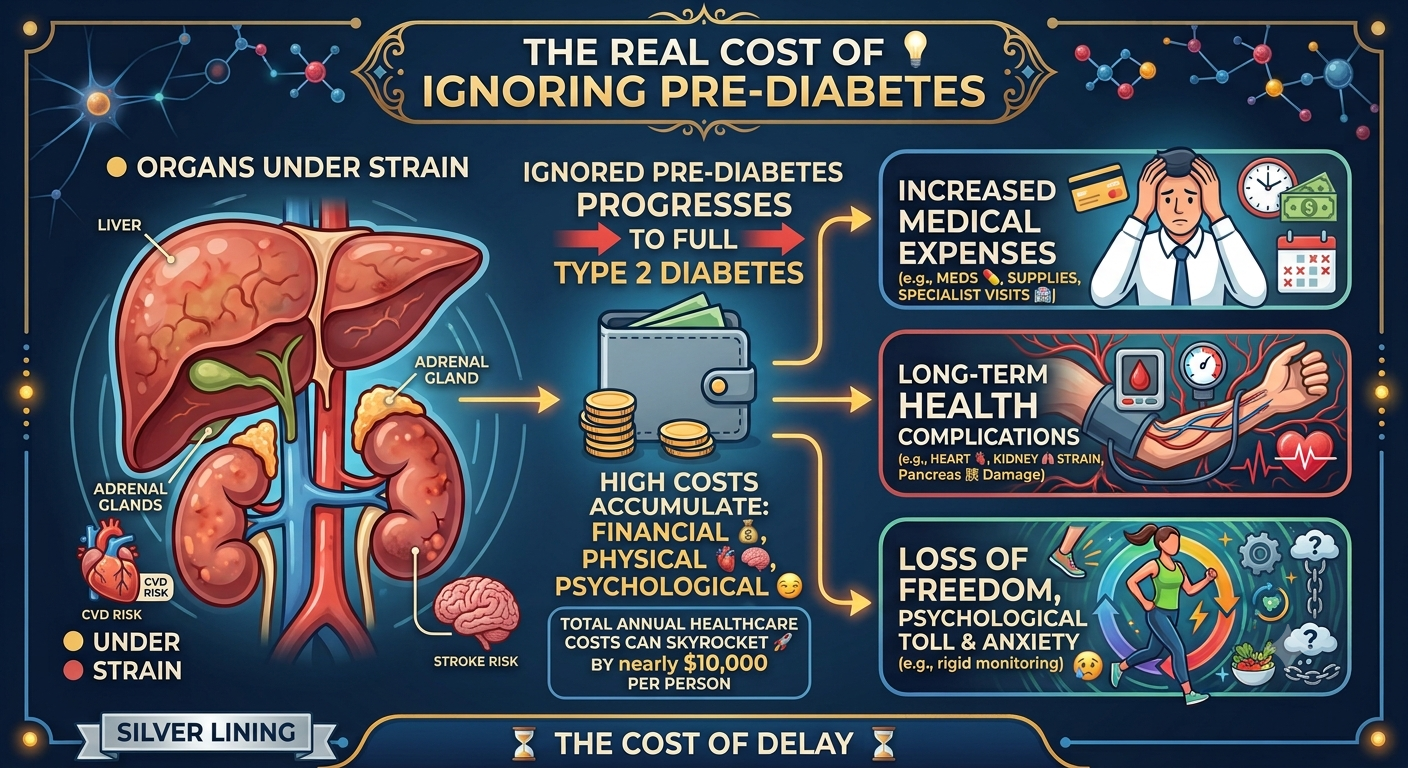
The Hidden Cost of Complacency: The Real Price of Ignoring Prediabetes
We live in a world where we are constantly told to pay attention to our health, but when a doctor casually mentions that your lab results show “borderline” or “pre-diabetic” blood sugar levels, it’s remarkably easy to shrug it off. After all, you feel fine. There are no flashing red lights, no sudden pains, and no obvious symptoms.
Prediabetes is often called a “silent” condition for exactly this reason.
But brushing off prediabetes isn’t like hitting snooze on a future medical issue that you can just deal with later. It comes with a massive, compounding, and immediate toll. If you are currently ignoring a prediabetes diagnosis, here is what it is actually costing you right now—and what it will cost you down the road.
1.The Financial Toll: From Cheap Prevention to an Expensive Lifetime Burden
The word “pre” creates a false sense of security. It makes it feel like you are standing outside the danger zone. But from a financial perspective, ignoring prediabetes is the exact moment a cheap, manageable health shift turns into a massive financial drain.
- The “Healthy” Illusion: Many people skip preventive screenings or ignore minor lifestyle adjustments to save money or time. In reality, early interventions, basic dietary adjustments, and routine checkups are incredibly inexpensive compared to the alternative.
- The Price of Progression: Once prediabetes crosses the threshold into full Type 2 diabetes, the financial landscape shifts drastically. Healthcare costs can skyrocket by nearly $10,000 each year per person.
- The Lifetime Burden: This isn’t a one-time fee. The out-of-pocket expenses accumulate into thousands of dollars annually to cover mandatory medications, glucose testing supplies, regular specialist visits, and the cost of managing secondary complications.
- Workplace Losses: The drain isn’t just on what you spend; it’s also on what you lose. Diabetes frequently impacts your earning potential through missed workdays, lower daily productivity due to fatigue, and potential long-term disability claims.
- The Physical Toll: Silent Damage in Real-Time
One of the most dangerous myths about prediabetes is that the damage hasn’t started yet. In truth, consistently elevated blood sugar is already quietly straining your internal systems every single day.
- Organ Damage Under the Radar: Even before turning into full-blown diabetes, chronically high glucose levels are linked to long-term vascular damage, slowly wearing down your heart, blood vessels, and kidneys.
- Cardiovascular Risks: People with prediabetes face a 15% greater risk of cardiovascular disease. Because the condition is silent, it leaves individuals highly susceptible to unexpected heart attacks and strokes.
- Kidney and Liver Strain: Your kidneys have to work twice as hard to filter excess waste and sugar out of your bloodstream, multiplying your risk for chronic kidney disease. Concurrently, high glucose prompts the body to store excess fat in the liver, paving the way for fatty liver disease.
- The Irreversible Threshold: Your body is incredibly resilient, but it has a breaking point. If left unaddressed, prediabetes continuously overworks your pancreas. Eventually, this constant strain causes permanent, irreversible damage to your insulin-producing beta cells. Once those cells are gone, your body loses its natural ability to manage blood sugar.
- The Psychological Toll: The Loss of Freedom
Health isn’t just physical—it’s mental. Ignoring a looming health crisis doesn’t make the underlying anxiety disappear; it just delays the emotional fallout and exchanges future freedom for temporary comfort.
- Anxiety and Chronic Stress: Deep down, ignoring a warning sign creates a heavy psychological burden. Worrying about your health, anticipating the next lab report, and stressing over brewing financial strain takes a massive toll on your daily mental well-being.
- Flexibility vs. Strict Constraint: Right now, managing prediabetes is about flexibility. It means choosing better foods, moving a bit more, and prioritizing sleep. You are in the driver’s seat. However, if you let it progress to diabetes, that flexibility turns into strict constraint. Your life becomes dictated by rigid monitoring schedules, mandatory medications, doctor appointments, and dealing with permanent physical limitations.
The Silver Lining: The Power is Entirely in Your Hands
If this sounds alarming, it’s supposed to be—but it comes with an incredibly hopeful caveat. Prediabetes is a critical decision point, but it is entirely reversible.
You do not need a radical, exhausting overhaul of your entire existence to change your trajectory. Clinical studies show that you can completely reverse prediabetes and avoid these compounding costs by taking three practical steps:
- Lose 5% to 10% of your body weight: A modest weight reduction dramatically improves your body’s insulin sensitivity.
- Adjust your diet: Focus on adding complex carbohydrates, high-fiber foods, and lean proteins rather than restrictive crash dieting.
- Move consistently: Aim for 150 minutes of weekly exercise—which breaks down to just a brisk 20-minute walk a day.
Prediabetes is not a life sentence; it is a wake-up call. It’s a second chance written in a lab report, giving you the exact blueprint you need to save your wallet, protect your body, and reclaim your peace of mind. Don’t hit snooze.