A New Chapter in Obesity Care: The Story of Tirzepatide and Semaglutide
For decades, obesity treatment felt like a frustrating cycle — diets that worked briefly, exercise routines that were difficult to sustain, and medications that offered only modest benefits. Patients often blamed themselves, not realising that obesity is a chronic, relapsing, biological disease, not a failure of willpower.
Then came a quiet revolution.
In clinics around the world, endocrinologists began noticing something remarkable. Patients who had struggled with weight for years were returning with lighter steps, brighter faces, and numbers on the scale that had not moved in decades. The reason was a new class of medications — semaglutide and tirzepatide — drugs that finally addressed the biology of appetite, metabolism, and insulin regulation.
The Transformation Begins
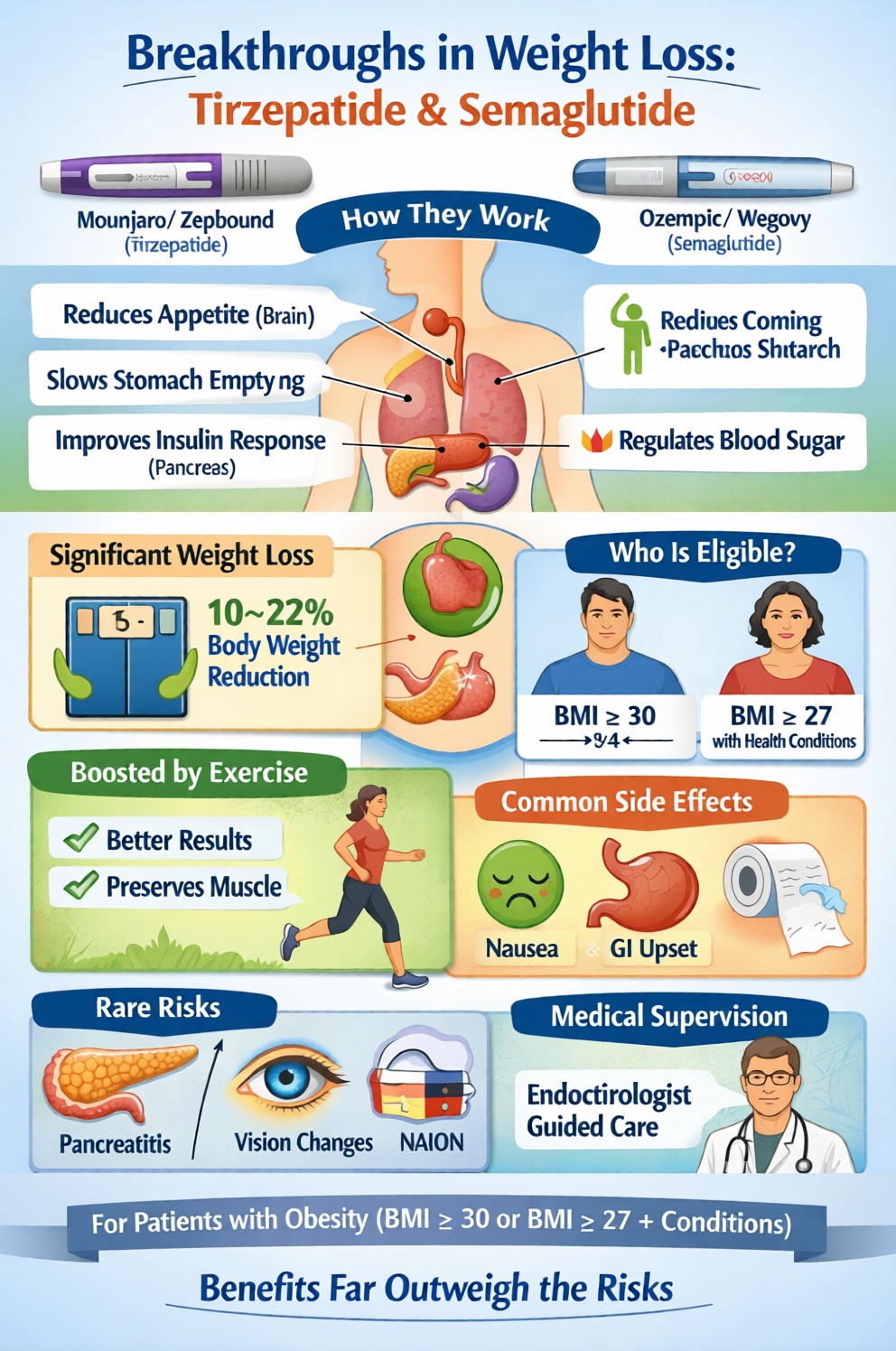
Semaglutide, a GLP‑1 analogue, was the first to show that double‑digit weight loss was possible without surgery. Soon after, tirzepatide — a dual GIP/GLP‑1 agonist — pushed the boundaries even further, delivering results once thought impossible outside bariatric procedures.
Patients described a quiet shift: “For the first time, I’m not fighting my hunger all day.” “Food doesn’t control me anymore.”
And the data matched their stories. Weight loss of 10–15% with semaglutide and 15–22% with tirzepatide became not the exception, but the expectation.
But Every Journey Is Different
Even with these powerful medications, weight loss is not identical for everyone. Some patients lose weight rapidly; others progress steadily over months. Genetics, metabolic health, insulin resistance, lifestyle, and even gut hormones influence the pace.
What clinicians observed consistently, however, was this: patients who incorporated regular physical activity — even simple walking — achieved more stable, predictable, and sustained results. The medication quiets the appetite; movement shapes the outcome.
Who Are These Medications For?
These drugs are not cosmetic shortcuts. They are intended for individuals with:
- BMI ≥ 30, or
- BMI ≥ 27 with obesity‑related conditions such as diabetes, hypertension, PCOS, sleep apnea, or fatty liver disease.
For these patients, obesity is not a matter of choice — it is a medical condition with real metabolic consequences. Treating it early prevents years of complications.
The Side of the Story Patients Don’t Always Hear
Almost everyone starting these medications experiences some gastrointestinal discomfort — nausea, early fullness, bloating, constipation, or loose stools. These effects are expected, almost universal, and usually settle as the body adapts. Slow dose escalation and mindful eating help significantly.
Rare side effects exist too, and must be respected:
- Pancreatitis
- Gallbladder issues
- Worsening diabetic retinopathy (especially with rapid glucose improvement)
- Extremely rare cases of NAION
- Severe GI intolerance
This is why close medical supervision is non‑negotiable. An endocrinologist or trained physician ensures safe titration, monitors risks, and manages complications early.
Why the Benefits Still Outweigh the Risks
For most patients, the transformation is life‑changing:
- Better glycemic control
- Lower cardiovascular risk
- Improved mobility and energy
- Reduced inflammation
- Better sleep and mood
- A sense of control they haven’t felt in years
Obesity is a chronic disease. These medications finally treat it as one — targeting the hormonal pathways that drive hunger, cravings, and fat storage.
A New Era, But Not a Magic Wand
The story of tirzepatide and semaglutide is not about shortcuts. It is about science catching up with reality — acknowledging that obesity is complex, multifactorial, and deeply biological.
Medication alone is not the whole story. It is the foundation. Lifestyle, nutrition, sleep, and physical activity complete the narrative. And long‑term follow‑up ensures the story doesn’t end with weight loss, but with lifelong metabolic health.
The Future of Obesity Care
As research evolves, we are entering an era where obesity can be treated proactively, compassionately, and effectively. These medications are not just tools — they are hope. They are the beginning of a new chapter for millions who have struggled silently for years.